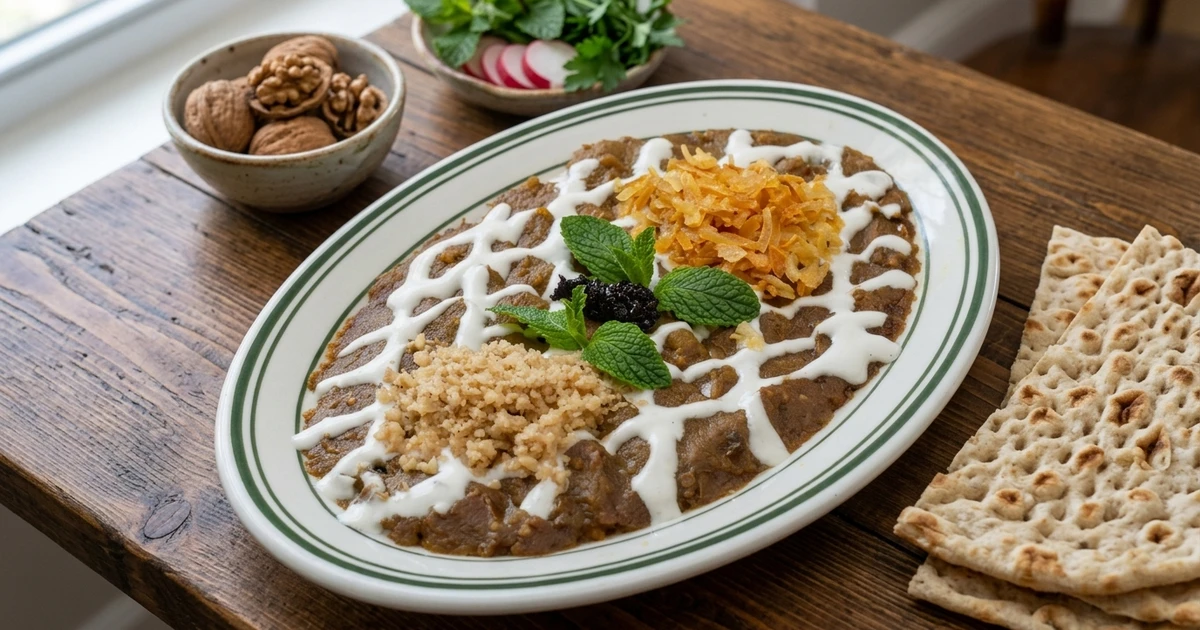
Scroll down Negeen’s Daily Specials and one name tends to stop first-timers mid-order: fesenjan. It sits at $26, next to the more familiar ghormeh sabzi, and it looks — on paper — like just another stew. It isn’t. Fesenjan is one of Persian cuisine’s most distinctive dishes, and it tastes almost nothing like the rest of the menu around it.
The Basics: What’s Actually In It
Fesenjan is built from two core ingredients: ground walnuts and pomegranate, usually in the form of pomegranate molasses or paste. Those two components are simmered together low and slow — sometimes for hours — until the walnuts release their oil and the sauce reduces into something thick, dark, and glossy. Chicken is cooked directly in that sauce, absorbing the sweet-tart, nutty flavor as it simmers. The result is a stew that reads as rich and slightly sweet on the first bite, then settles into a deep, almost bitter walnut finish — a flavor profile genuinely unlike anything else typically found on a Persian menu.
Why It’s Considered a Signature Dish
Fesenjan holds a special place in Persian cooking, often reserved for celebrations, weddings, and Yalda Night (the Persian winter solstice festival) specifically because of how labor-intensive and rich it is. It’s not an everyday weeknight stew in most Persian households — it’s the dish that shows up when someone wants to impress a table. That reputation is part of why Negeen keeps it on its Daily Specials list rather than treating it as a rotating item: it’s a dish people actively seek out.
How Fesenjan Compares to Ghormeh Sabzi
If you’ve already tried Negeen’s ghormeh sabzi — the herb-and-dried-lime stew covered in our other dish guide — fesenjan is its opposite in almost every way. Ghormeh sabzi is green, herbal, and tangy, built from sautéed parsley, cilantro, and chives. Fesenjan is dark, nutty, and sweet-tart, built from ground walnuts and pomegranate instead of fresh herbs. Ordering both at the same table is one of the best ways to understand the actual range of Persian stew cooking in a single visit — from bright and herbaceous to deep and dessert-adjacent.
What to Expect When You Order It
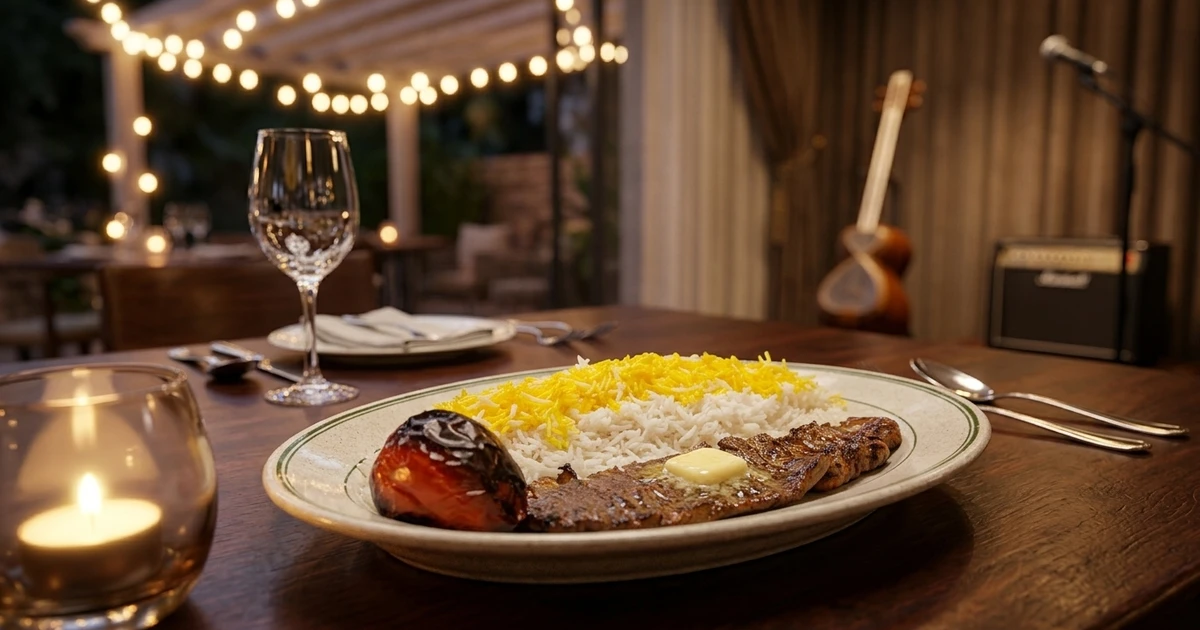
Fesenjan is traditionally served over plain or saffron-dusted basmati rice, which gives the rich sauce something neutral to sit on. At Negeen, it pairs naturally with a side of torshi (the restaurant’s marinated vegetable pickle) to cut through the stew’s richness with acidity, and a glass of doogh — the yogurt-based drink on Negeen’s beverage list — to cool the palate between bites. Because it’s a slow-cooked dish built for lingering, it fits naturally into Negeen’s Friday and Saturday evenings, when live Persian music plays in the dining room.
Dietary Notes
Fesenjan at Negeen is chicken-based, and it’s covered under the restaurant’s halal certification like the rest of the menu. If you’re dining with a mixed group that includes a vegetarian, Negeen’s dedicated Vegetarian menu section runs alongside the Daily Specials, so no one at the table has to sit out the stew course entirely.
Order It Direct
Whether you’ve had fesenjan a hundred times or you’re trying it for the first time off Negeen’s Daily Specials list, ordering direct through Negeen’s own platform is the faster, better-value way to get it — no added technology or platform fees layered on top like third-party apps charge.
Order Fesenjan & More Direct →
Frequently Asked Questions
Q: What is fesenjan made of? A: Fesenjan is a Persian stew built from ground walnuts and pomegranate molasses or paste, simmered slowly with chicken until the sauce turns thick, dark, and sweet-tart.
Q: Does Negeen serve fesenjan? A: Yes — fesenjan is listed on Negeen’s Daily Specials menu at $26.
Q: Is fesenjan sweet or savory? A: Both. It balances the natural sweetness of pomegranate against the earthy bitterness of ground walnuts, landing closer to sweet-and-savory than a typical spiced stew.
Q: How is fesenjan different from ghormeh sabzi? A: Ghormeh sabzi is herb-forward and tangy, built from sautéed greens, kidney beans, and dried lime. Fesenjan is richer and nuttier, built from ground walnuts and pomegranate rather than fresh herbs.
Q: Is fesenjan halal? A: Yes — Negeen is halal-certified, and that certification applies to the chicken used in its fesenjan.
Q: What should I order alongside fesenjan? A: A side of torshi (marinated vegetable pickle) and rice are the traditional pairing — torshi’s acidity balances the stew’s richness.